Consulting innovation · Communication design
One-page executive reporting
Imagine a senior executive reading these over a cup of coffee. If a report fails that test, it will not be read, and unread quality information is indistinguishable from no quality information.
Why
The people who own go-live decisions rarely read test documents. A 30-page plan, a defect register, and a coverage spreadsheet all assume a reader who does not exist. The result is sign-off by deference: the business approves what it cannot interpret, and the accountability gap surfaces later, in production, with interest.
How
One discipline, applied to every artefact a stakeholder touches. The family, in the order a programme meets them:
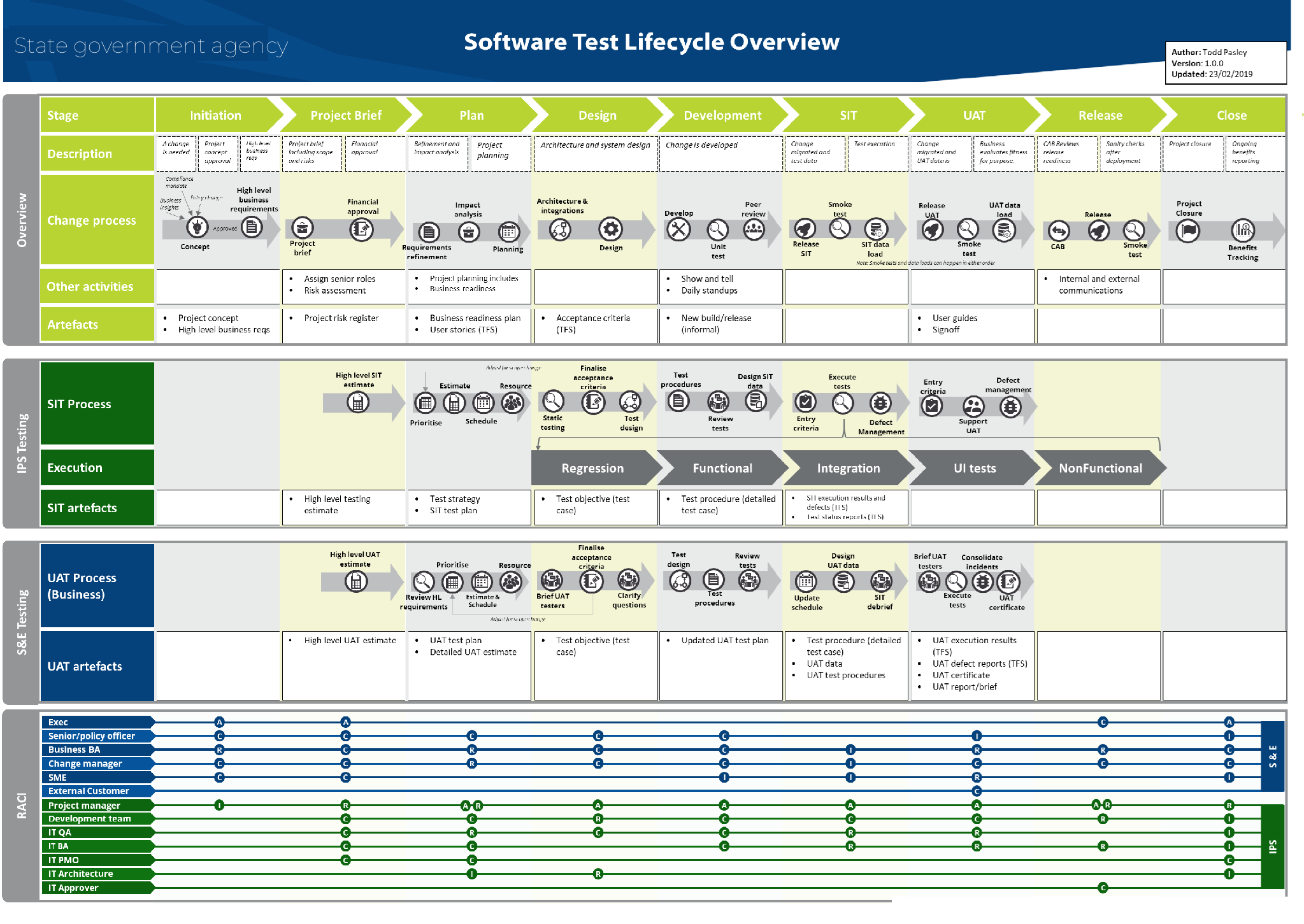
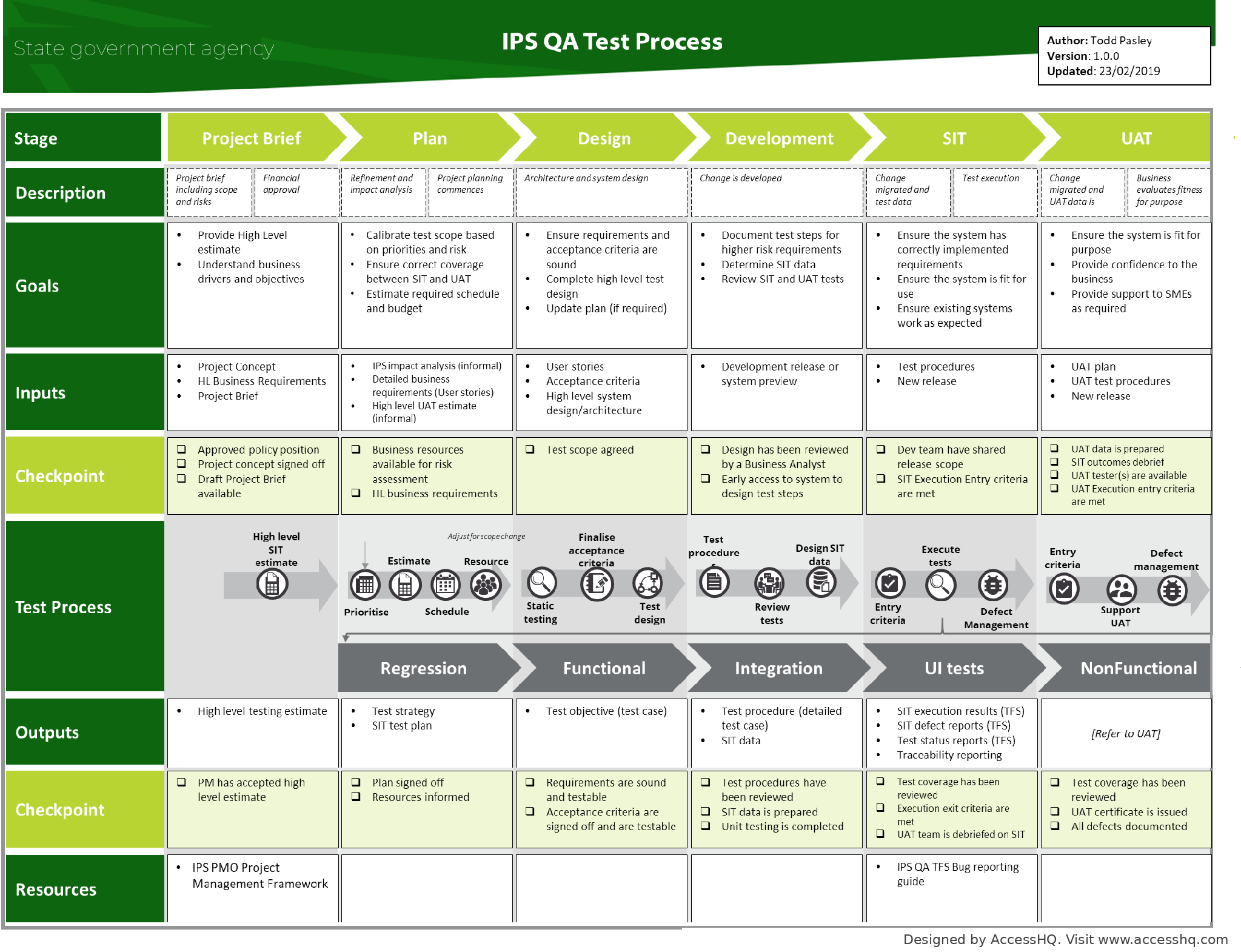
- One-page framework. The whole test lifecycle on a page: stages, process, artefacts, and who is involved, so anyone can see where they fit.
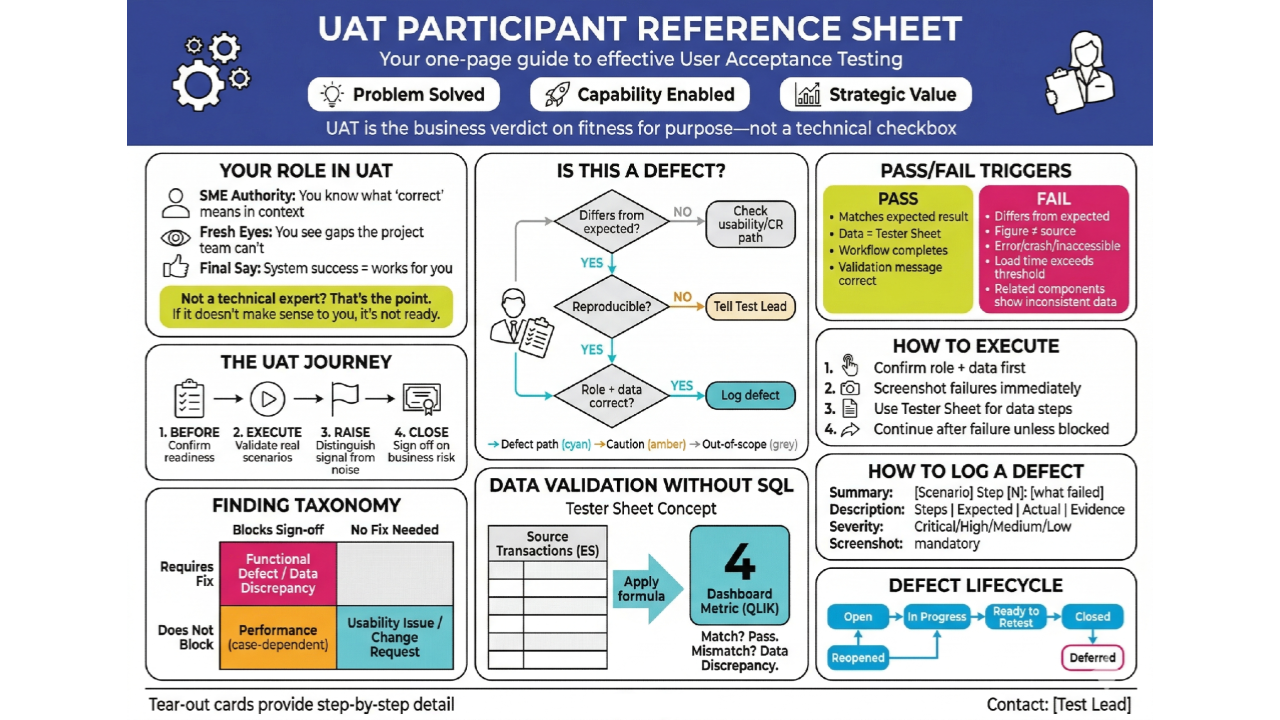
- One-page cheat sheet. A participant reference card: your role, the journey, what counts as a defect, how to log one. Read in five minutes, kept on the desk.
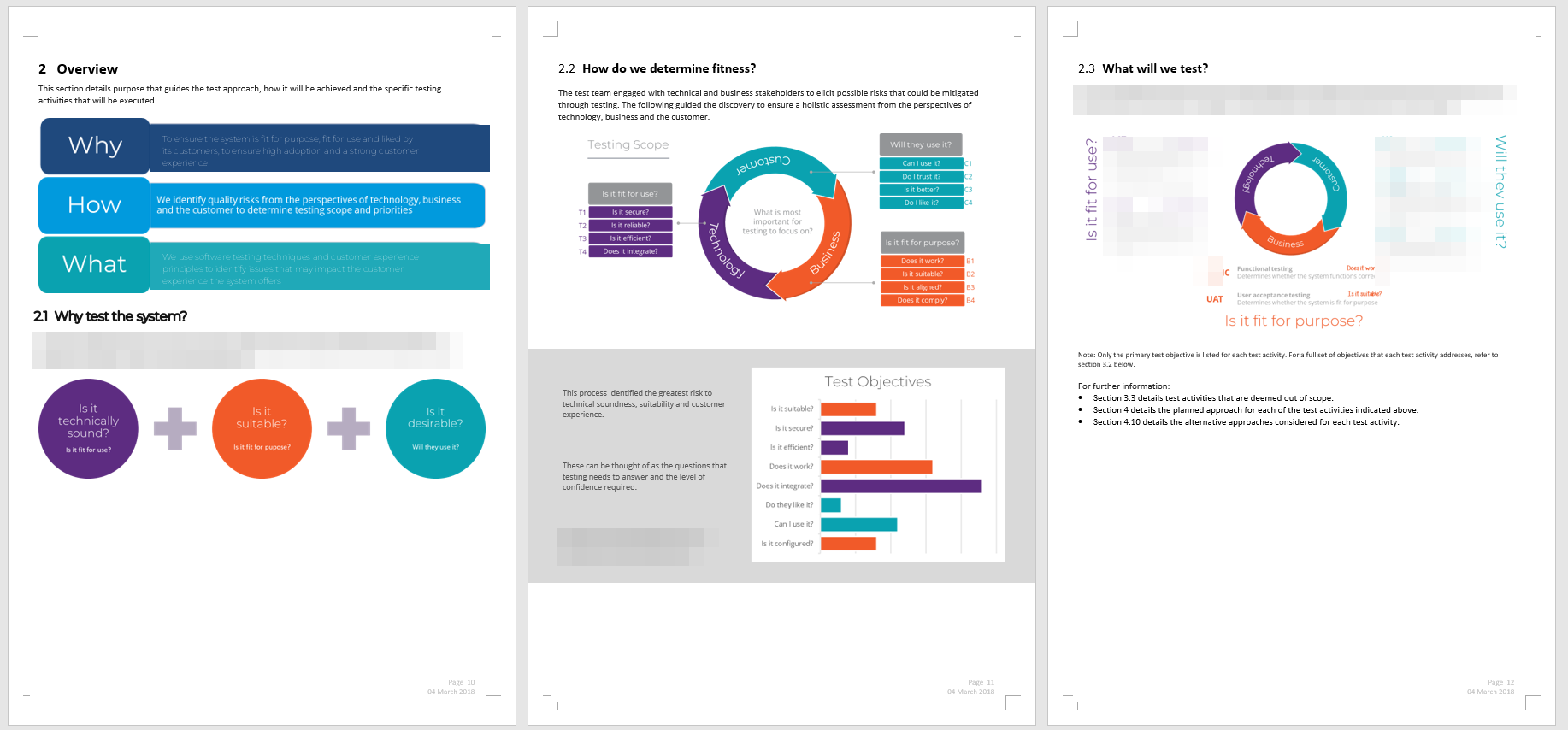
- Three-page summary of a 30-page test plan. Why (the drivers, straight from the workshop), What (the questions to be answered), How (the activities that answer them).
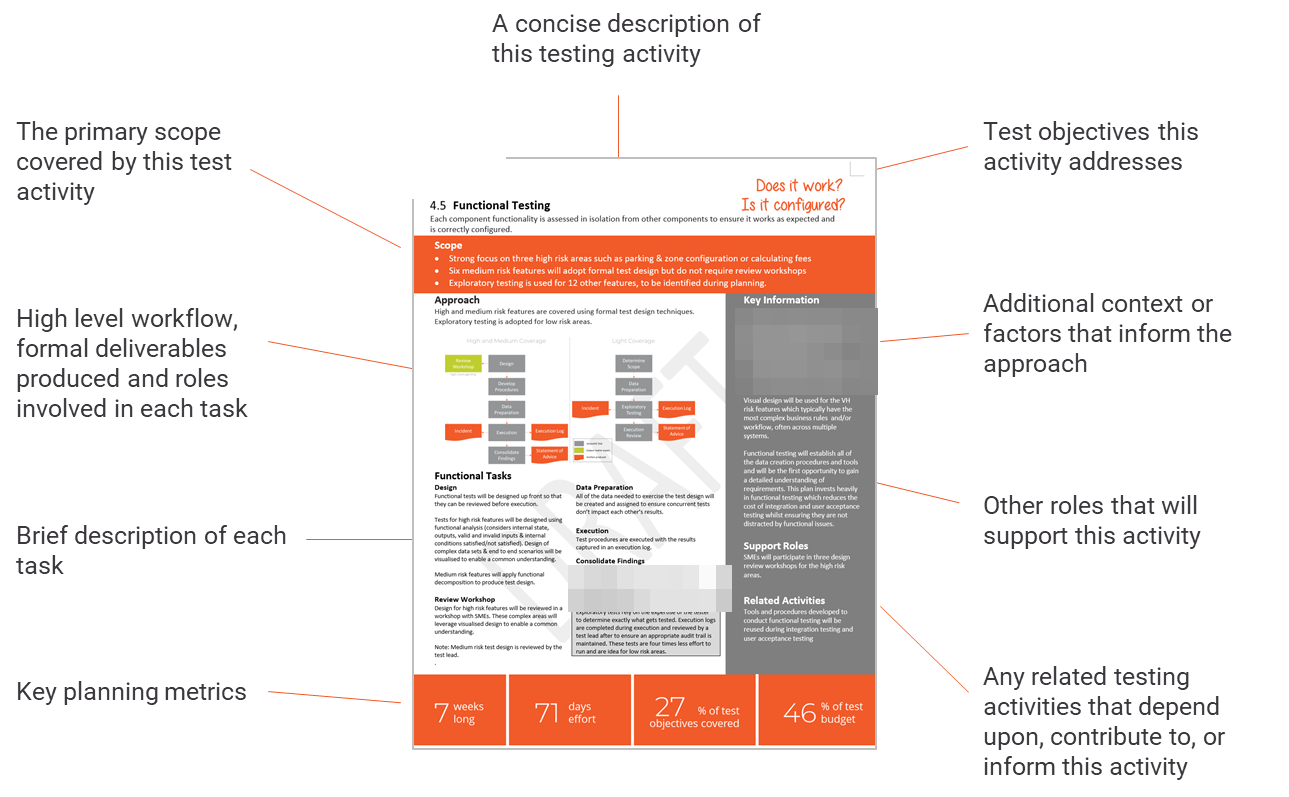
- Test activity plan on a page. Scope, approach, tasks, supporting roles, and the planning metrics for a single activity.
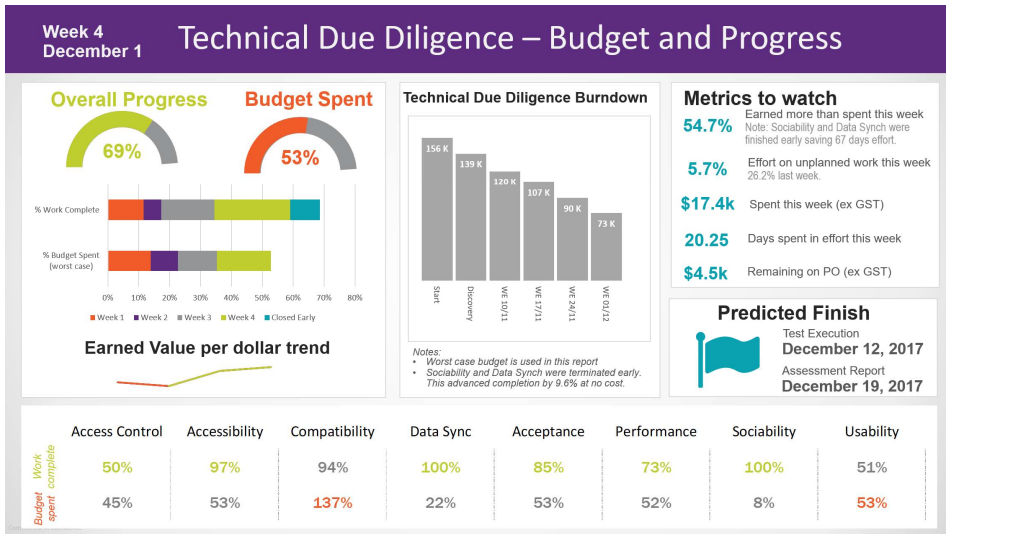
- Status report on a page. Progress, budget, burndown, earned value, predicted finish, and the metrics to watch this week.
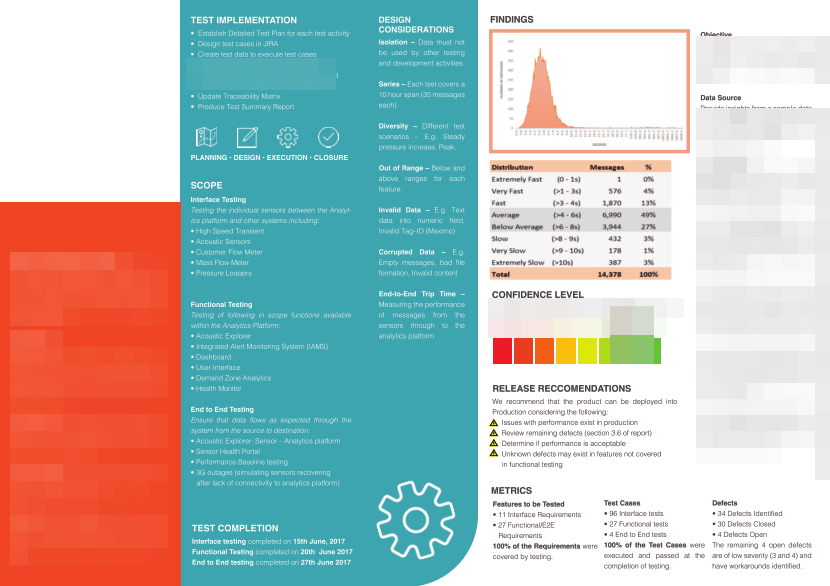
- Test report on a page. Verdict first: findings, confidence, release recommendation, and the metrics behind them.
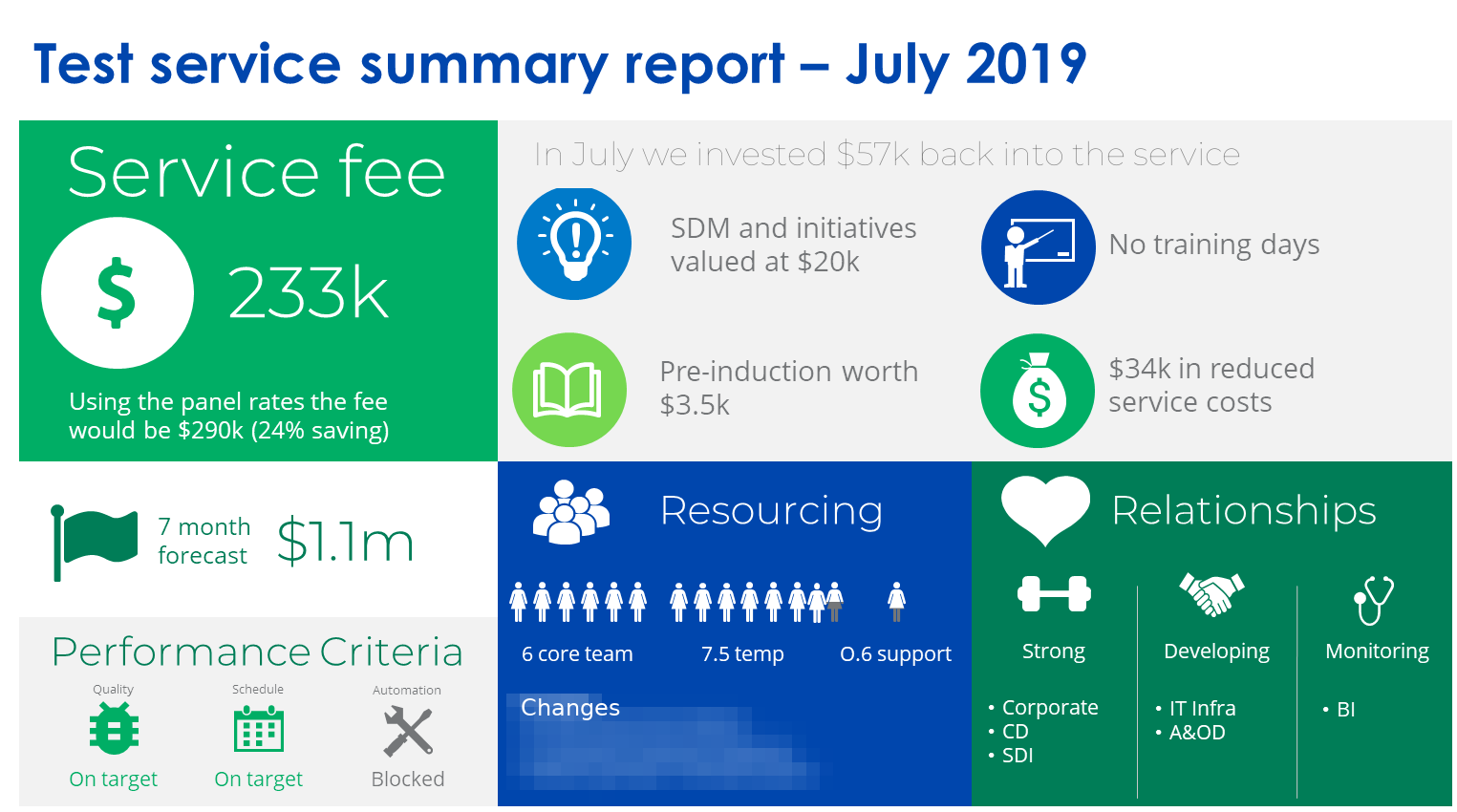
- Service and capability overview. A managed service, monthly, on a page: fee against benchmark, value invested back, resourcing, relationships, performance criteria.
- Portfolio quality status. The same verdict-first discipline rolled up across a portfolio of programmes, one page per executive audience.
What
Applied across managed services, programme reporting, and evaluation engagements for state government and enterprise customers. The handout discipline that started in a small state government agency's test management framework later became a UAT playbook for an agency in Singapore: the same why-how-what plus operational guidance pattern, carried across a decade, two countries, and very different security postures.
The consistent outcome is faster, better-grounded sign-off conversations. When the executive has actually absorbed the state of quality, the meeting is about the decision, not about translation.